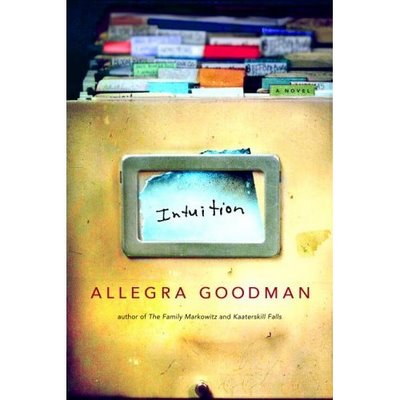
Showing posts with label Allegra Goodman. Show all posts

Monday, January 22, 2018

Bookmark Graveyard, Chapter 1

Wonder why you have so many pages bookmarked? I was wondering and was thinking, let me just delete this.

Then my cyberhoarder mentality kicked in. So I decided to drop these here. I don't know why. Just because, I guess.

The go-to list for Roberto Bolaño works: The Bolaño Syllabus: A Final Reckoning.

Boston Review's Top 20 Poems of 2015 here.

Rolling Stone's Top 550 Songs of All Time here.

Buzzfeeds's List of Posts about Tattoos here.

"F.A.Q.s," a story by Allegra Goodman on The New Yorker here.

50 Places Every Literary Fan Should Visit via Flavorwire here.

Good times.

Monday, November 13, 2006

Richard Avedon Photographs Writers, 1994

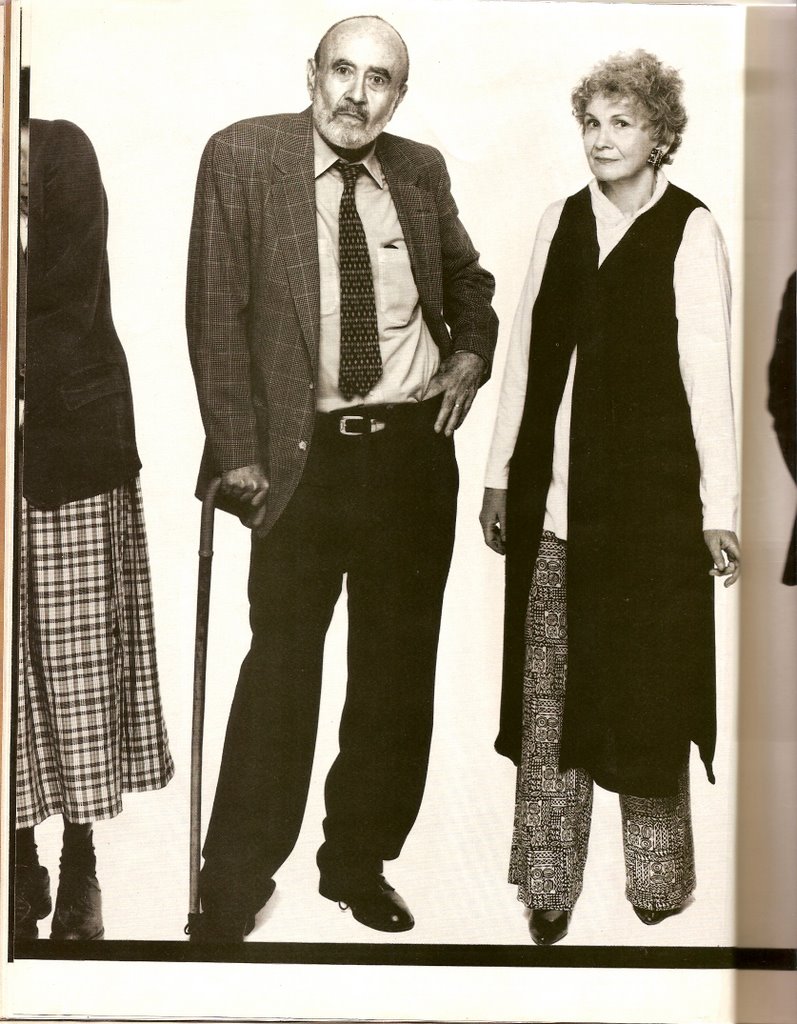
Last month, when discussing Allegra Goodman's book Intuition, I mentioned how I was inspired and motivated to work on publishing my own poetry by a photograph from The New Yorker with Allegra standing next to JohnUpdike. I had cut the photo up and put it in the plastic cover of my writing binder for inspiration.

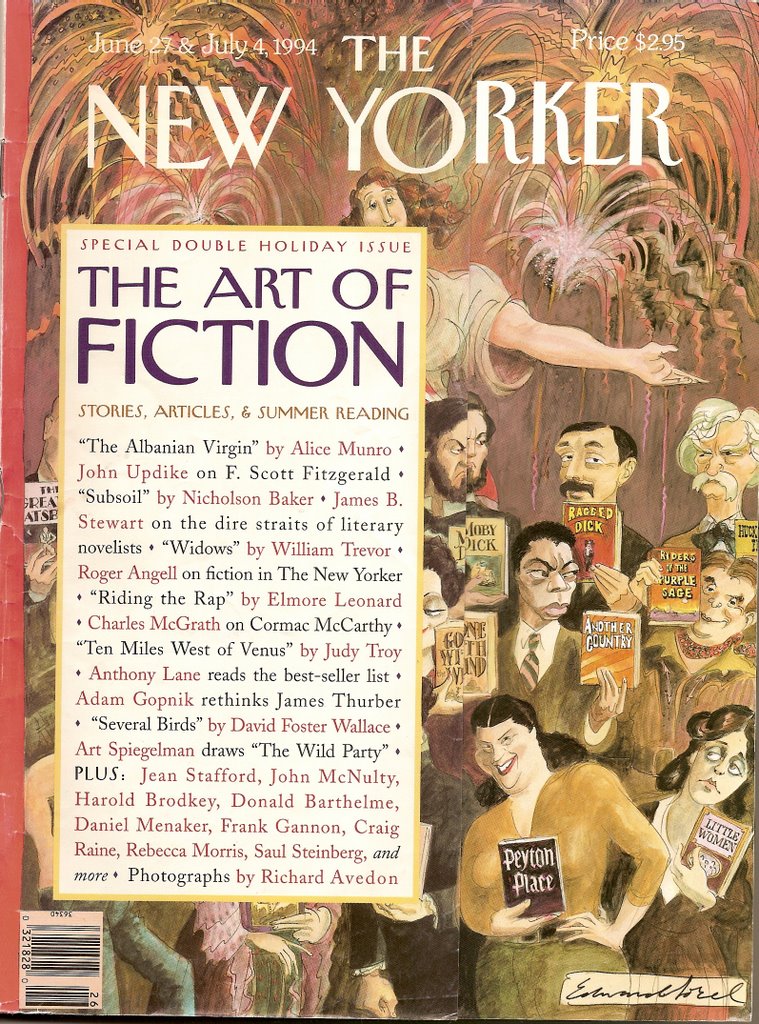
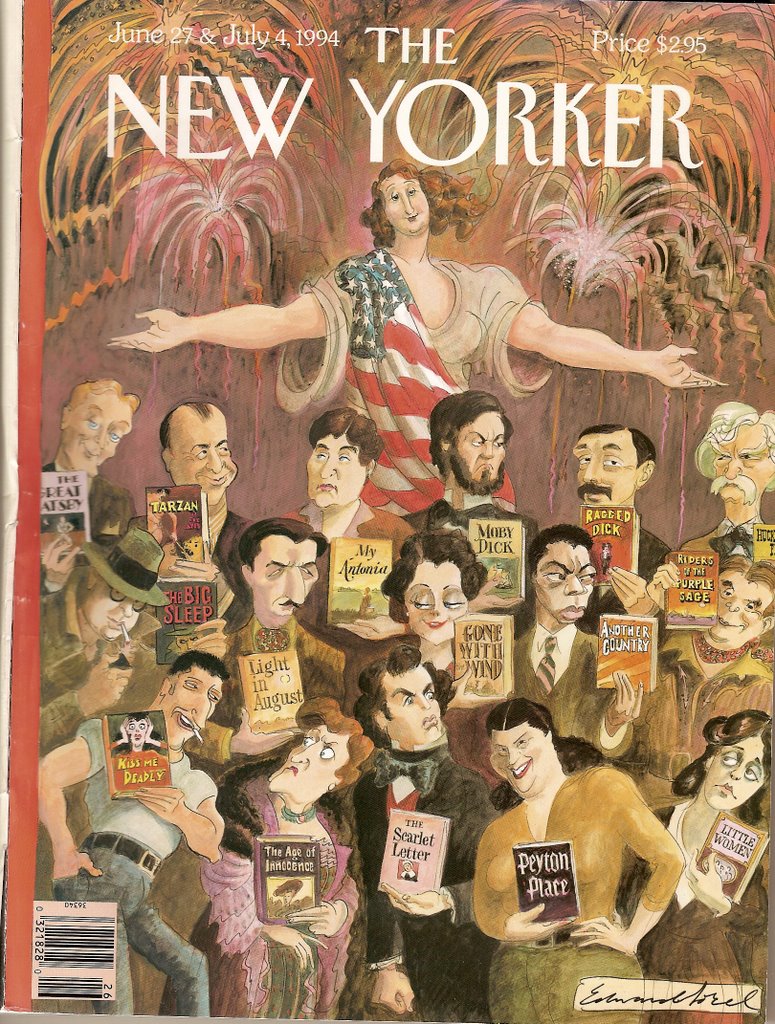
When discussing this, I thought it would be nice to find the photos again. I ended up finding a copy of the issue. On receiving it in the mail, I discovered that it was a familiar in more ways than one. The Edward Sorel cover is a classic which I had saved and hangs on our living room wall with several other New Yorker covers:


The magazine also had several other memorable pieces, including the first appearance of illustrator Art Spiegelman's interpretation of the poem by Joseph Moncure March's "The Wild Party". Look here to learn more about this amazing book.

Anyway, these photos don't appear to be anywhere else online. They may be in an Avedon book somewhere, but I haven't figured out where. So here, for your enjoyment, is the amazing "line-up" assembled by Mr. Avedon for The New Yorker.


That's Michael Chabon, and William Maxwell, who died in 2000.

Maxwell, Mavis Gallant, Bobbie Ann Mason, and Haruki Murakami long before attaining his huge popularity in the U.S.

Murakami, Ann Beattie, John Updike, and a sliver of Allegra Goodman.

Allegra Goodman, Nicholson Baker, Thom Jones, and Jamaica Kincaid.

Harold Brodkey (who died in 1996) and Alice Munro, a phenomenal short story writer.

Tom Drury and Edna O'Brien.

William Trevor, V.S. Pritchett (who passed in 1997) and Deborah Eisenberg.

Here's the accompanying text by Daniel Menaker, a staff writer with the magazine for twenty-six years. The text is a bit lengthy, but I have painstakingly retyped it here (probably in violation of some copyright laws) for your enjoyment. It's worth the read.

Last month, fourteen fiction writers closely associated with The New Yorker gathered in Manhattan to have their picture taken by our staff photographer, Richard Avedon, and then joined some of the magazine's editors for an on-location party. The event started at four o' clock in the afternoon and was over at about eight. Mr. Avedon sorted the fourteen into groups of four or five, and called these groups one at a time into a large, dark warehouselike room next to a smaller and brighter room, where the socializing took place. In the workroom was a stagelike platfrom, and each group sepent about thirty minutes being photographed there. Then it was back into the bright room. As the party progressed, the guest began to change seats, so that they could talk to old friends or to people they had never met before. And when the party finally broke up, some went over to the Algonquin Hotel for a nightcap, while others moved on to a party downtown.

At the beginning of June, Mr. Avedon travelled to London, to photograph three more fiction writers. This smaller gathering -a tea party, of sorts- took place in a rented studio in the Clapham section of London. The results of these two sessions are presented on the next seven pages.

We regeret that a number of writers couldn't join us, because of illness or previous plans, but the parties honored them, too. Both gatherings reminded us that writers do what they do not only to tell the rest of us what they see and what they know but to converse, implicitly, among themselves, and that, given the right circumstances, they will talk up a happy storm in person.

After the camera work was over, the participants in the Manhattan photo-op/party kept coming up with analogies for it. They are writers, after all, and they spend their days trying to flush out accurate correspondences. "It was like a combination dinner party and conference and school photo," Allegra Goodman said. John Updike said the photo session was "like a police lineup," and William Maxwell, describing the whole afternoon, weighed in with "Somewhere between a circus and a Commencement Day." Nicholson Baker said, "It seemed as if everything had just been whitewashed- it was so white that the whole gathering seemed afterworldly." And Michael Chabon, who, like Ms. Goodman, is young and currently of California, said, "It all reminded me of those comic-book-hero groups-- the Justice League of Amercia, or something. Of course, I was the Robin figure--Bucky the sidekick. Wait a minute, I'm getting D.C. comics mixed up with Marvel."

All the guests at this event agreed that it was a day to remmber. Alice Munro felt at home enough to take off her shoes. "They hurt," she said, "so I just took them off." She explained that she had worn those particular shoes "so I would look taller in the pictures." Jamaica Kincaid talked to Munro about a vase of flowers on a table. Together, they listed the horticultural names of the bouquet's components. Impressive. When John Updike saw Haruki Muramaki standing alone, he went over to him and ambassadorially commenced conversation by complimenting his work and testing the thesis that Murakami couldn't have flown in all the way from Japan. He hadn't. Cambridge.

Maxwell said of Thom Jones, "I knew that he had been a boxer and that his storeis were often about boxing, and my first good friend was a boxer, so I talked to him about boxers and asked if they fought because they were angry, hostile to the world. He said no, they were often gentle and frightened." Frightened of what? "Jones said that they're always afraid that they're going to get the shit beat of them in the ring." Ann Beattie found it funny, in a melancholy way, to hear that the two Canadians, Alice Munro and Mavis Gallant, recalling from their past stints as teachers the same kind of privations she herself had suffered more recently. "They both talked about having to buy their own phones for their offices," she said. "I guess it never changes." Bobbie Ann Mason was startled and flatterd to learn that Alice Munro and her husband had travelled through western Kentucky because they admired her work and wanted to see the region her stories describe. Tom Drury - along with nearly everyone else, it seemed- was delighted to meet Alice Munro at last; they have been carrying on a lively correspondence for months. Harold Brodkey admired the demanor of one of his fellow subjects. "How long have you been so happy?" he asked.

The setting was ur-New York---a place where the meatpacking districty and insdurty and Greenwich Village brownstones converge. Sun flooded in through tall windows. High spirits prevailed even on the platform in the cavernous photography room. "Allegra, would you mind putting your hand on John's arm?" Richard Avedon asked. "But we only just met," she said, with a giddy laugh. There were a fair number of giggles during the shoot, along with some schoolroom self-conscuiousness. Come to think of it, there was something close to a common denominator among the similes that the guests used for this part of the party, and that was the trope of the yearbook photo. Makes sense, because how often do you find yourself lined up and coached by a photographer? And what are writers of fiction if not people who can observe and respond to the world with youthful wonder and curiosity? The yearbook-photograph comparison brings to mind other staples of graduation, particularly what used to be called "Superlatives." What categoreis would one use here? Most Arresting Imagery? Best Characterization Through Dialogue? Cleverest Chronology? Funniest Names? Done Most for Genre? In any case, it's one hell of a class.

Tuesday, October 24, 2006

Allegra Goodman's Intuition


Last week I belatedly finished Allegra Goodman's third novel Intuition. It's her fifth book. Her first was Total Immersion, a collection of short stories that she published her senior year at Harvard. She is widely regarded as one of America's best young writers. I tend to agree. She's a fantastic storyteller. However, I am perhaps a bit biased. You see, Allegra and I go way back.
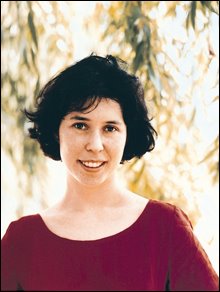

I'll be up front and say, yeah, I'm name-dropping. Allegra and I are not friends. We are distant acquaintances. If we walked past one another on the street, she may not recognize me. If you reminded her, however, she'd remember. When I saw her at a Barnes & Noble a few years back when her first novel Kaaterskill Falls was published and she was touring, she remembered me. I think I sent her a family Hanukkah card or two. I may send another one this year. She seemed happy to see me back in 1999 at that Barnes & Noble, but then again, she was probably just being courteous.

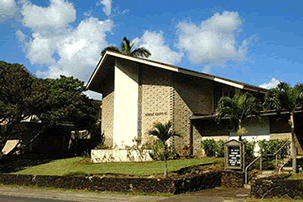
I should elaborate. Anyone familiar with Allegra's earlier work will know she wrote about being Jewish in Hawai'i. She refers to "Martin Buber Temple" and writes semi-autobiographically, especially in her earlier stories. Martin Buber Temple is a fictional version of Temple Emanu-El:
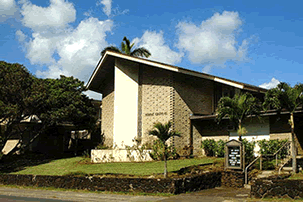
That's the place where I received my Jewish education, where I was bar mitzvah'ed and where I met Allegra Goodman.

Allegra went to my rival high school, but as children and pre-teens we shared some space at the temple Hebrew School.

I will confess. I didn't like Allegra or her sister, Paula. Paula's a doctor now. I'll go out on a limb and say the Goodman sisters didn't like me, either. I was an obnoxious jerk to them, and didn't take my religious education very seriously. I'm not blaming the other boys my age, but I was just part of the crowd of rambunctious Jewish boys (Ross Levy, Kale Flagg, Ivan Robin, Jeff Pepper, etc.) who were disruptive as ten and eleven-year old boys can be.

Allegra and Paula were serious students. They were smart, bordering on genius. And they knew it. They were everything I would hope my daughters will be. They were my opposites. I really couldn't stand them. As I aged, I realized how poorly I judged them. I don't recall ever saying or doing anything hurtful to them, but it wouldn't surprise me if I did. As they say, boys will be boys.

I am assuming that I will not someday appear as a character in one of Allegra's books. In retrospect, I don't think I was anything that significant in Allegra's life, just someone she might remember from a long, long time ago. But knowing her when I did, remembering her from a specific place and time, I feel particularly connected to Allegra's books, especially the ones that are set in the Hawai'i of my youth.

That's perhaps why I waited so long to read Intuition. It has nothing to do with Hawai'i, or the prevailing Jewish themes in her earlier novels. So when the Bay Ridge Jewish Center's reading group picked it, I finally had my excuse. And I didn't finish it in time for the discussion (blame John Dunning for that one). However, it was compelling enough and interesting enough for me to finish. And I liked it.

So, honestly, this post has been more about me than Allegra's book. I'll cut this short and direct you here, to Allegra's home page. She lists her books and links reviews and other related articles.

Also, here is a great article from last March's New York Times about the writing of Intuition.
If for any reason you can't read it (i.e. registration is required, etc etc), go here to read the text.

Plus, if you're interested, go here to hear Allegra reading from and discussing the novel.

As a postscript to this, I will speak in some additional vague terms about why I feel so connected to her. We had similar, yet very different upbringings. After high school, my mother often ran into her parents in the islands before they moved in 1994 to Nashville and Vanderbilt University. Sadly, Allegra's mother passed away from cancer in 1996 at the young age of 51.

In the Summer 1994 "Fiction Issue," The New Yorker, ran a series of photographs of many of its published novelists standing together. I cut out and pasted Allegra and John Updike standing next to one another. I put this in my binder of my poetry drafts as inspiration. I mark this as a driving point that motivated me to continue writing poetry in the 1990s.

Looking at the sliced up photo now, I recognize the photograph as the work of Richard Avedon. The caption is cut off, but it appears that Haruki Murakami and Michael Chabon were also part of the series. This was way before I had read anything by either of them. Of course, I had heard of Updike and was very impressed to see him standing next to Allegra.

I have subsequently found a copy of this issue online and have ordered it. Stay tuned and I'll share the photos when I get it in the mail.