Thursday, September 15, 2005

One Week Old


Despite the report that I've been a member of Blogspot since July 2004, I have only now achieved the overcoming of the first day curse. Billyblog has been up and running for a week now. Disclaimer: I do not claim to be the inventor of the term "Billyblog." Case in point:

http://billyblog.blog-city.com

I discovered this last night while googling billyblog. So be it, hopefully the other billyblog won't declare war on me. I strongly believe that the web is big enough for two billyblogs. At least the other billyblog's politics seem to be on the same side of the building as mine. Perhaps my billyblog would become oxyblog or something else if my counterpart in blog-city was dedicated to hatred, infringement of freedom, and/or NAMBLA literature.

To clarify the comment I made yesterday about the iPod. I don't have the white earphones (making me less of a target for podthievery on the subways), but I do take pride in the fact that I have a huge amount of tracks (7051) and they are so diverse. See, just dragging it out like this shows how I can be quite a bit of a dork and insufferable about it. Anyway, to further seal the deal, this is the playlist of what my iPod selected for me on shuffle on the way to work this morning:

"Scentless Apprentice" by a band called Flipper from an album called "Smells Like Bleach: A Punk Tribute to Nirvana."

"5 Minutes Alone" by Pantera

"Breaking the Girl" by the Red Hot Chili Peppers

"Cakewalk into Town" by Taj Mahal

"Instinct Blues" by The White Stripes

"I Fought the Law," Green Day's version

"Yellow Ledbetter" by Pearl Jam, live in Holland, October 14, 2000

"Baba O'Riley" covered by Jordis Unga on the TV show "Rockstar: INXS."

"Till the Morning Comes" by Neil Young

"Deer Dance" by System of a Down

"Headspace" by Velvet Revolver

"Crazy Train (live)" by Tenacious D (Jack Black's band)

"Don't Break Me Down" by the Donnas

"Rapid City, South Dakota" by Kinky Friedman

"Nobody's in Love This Year" by Warren Zevon

"The Two of Us" by the Beatles

++++++
Don't worry, I won't be doing this every day.

Wednesday, September 14, 2005

Bukowski, Still Kicking


As many of you who know me know, I have an iPod and, although I'm not one of those people that has all the colored accessories, and the white headphones, etc., I do talk about it to close friends and family about it more than I should. Anyway, this little device is my companion in the morning on the way to work which often influences my early morning thoughts.

Case in point: yesterday morning, iPod shuffle selected a Warren Zevon tune for me as I walked into the office. Today, on the way to work, I heard two separate tracks of Charles Bukowski reading his poetry.

It is amazing to me (in addition to the wonderfulness of his work), that Bukowski continues to enjoy success as a poet, even eleven years after his death. His books still sell. His signed items on eBay fetch hundreds of dollars. And sure, you can say that about a lot of dead writers, but Bukowski continues to publish new poems. Huh?

The guy wrote so much and sent so many pieces out to literary magazines, that his "new" poems continue to appear in literary magazines. And, for the second time in the run of The Best American Poetry series, a Bukowski poem has been anthologized in the 2005 volume. This is also on my mind as I am attending a reading for the series tomorrow night at The New School, and am fairly certain Bukowski will not be there. Anyway, kudos to Guest Editor Paul Muldoon for selecting a Bukowski poem. I was going to leave you today with the second poem I heard this morning, which happens to be one of my favorites, but alas, I couldn't easily copy it online. So here is another, a consolation of sorts, another favorite of mine:


The Genius Of The Crowd


there is enough treachery, hatred violence absurdity in the average
human being to supply any given army on any given day

and the best at murder are those who preach against it
and the best at hate are those who preach love
and the best at war finally are those who preach peace

those who preach god, need god
those who preach peace do not have peace
those who preach peace do not have love

beware the preachers
beware the knowers
beware those who are always reading books
beware those who either detest poverty
or are proud of it
beware those quick to praise
for they need praise in return
beware those who are quick to censor
they are afraid of what they do not know
beware those who seek constant crowds for
they are nothing alone
beware the average man the average woman
beware their love, their love is average
seeks average

but there is genius in their hatred
there is enough genius in their hatred to kill you
to kill anybody
not wanting solitude
not understanding solitude
they will attempt to destroy anything
that differs from their own
not being able to create art
they will not understand art
they will consider their failure as creators
only as a failure of the world
not being able to love fully
they will believe your love incomplete
and then they will hate you
and their hatred will be perfect

like a shining diamond
like a knife
like a mountain
like a tiger
like hemlock

their finest art

Tuesday, September 13, 2005

Zevon, Two Years Gone


Hard to believe Warren Zevon passed away 2 years ago last Tuesday in 2003. When listening to his music, I am still moved by the dark complexity of his lyrics and riveting sound of his voice. It is unfortunate that he is best known for "Werewolves of London," when he wrote so many other great songs. I have been a fan of his since the 1970's when I bought the 45 of Werewolves, which featured the B-side "Roland the Headless Thompson Gunner." "Roland" is my sentimental favorite of a long list of great songs. I bought the single as an 11-year old in 1978 and pretty much thought that Zevon's lyrical cursing, referring to "that son-of-a-bitch Van Owen," was pretty scandalous.

Zevon was always topical, as in this excerpt from 1980's title cut "The Envoy:"

Nuclear arms in the Middle East
Israel is attacking the Iraqis
The Syrians are mad at the Lebanese
And Baghdad do whatever she please
Looks like another threat to world peace
For the envoy
Send the envoy . . .
Send for me


I recommend any Zevon, but there are 2 discs that are great intros to the arc of his career. The 2-disc collections of "Genius" and "I'll Sleep When I'm Dead" are both nice greatest hits packages. Of course, they pre-date Zevon's coda "The Wind," a haunting farewell from one of my favorite singer-songwriters.


Shadows are falling and I'm running out of breath

Keep me in your heart for awhile


If I leave you it doesn't mean I love you any less

Keep me in your heart for awhile

Monday, September 12, 2005

Sunday Cycling

Hi all, a bit tired here. Rode in the NYC Century Bike Tour yesterday. Had hoped at the beginning of the Summer that I could pull off the 100 mile route, but "settled" for the 55-er instead. It was a gorgeous day in the city, quite like the September 11 from four years before. Several riders had pictures pinned to their jerseys. Airplanes flew in the cloudless sky. Beautiful, haunting, amazing. When people wonder why I live in this city, I offer many replies. One I have yet to invoke is the feeling of wonder and awe at riding on Manhattan city streets on a Sunday mornings, when the cars are merely nuisances (rather than dangers).

On another note, I mentioned this to Melanie, but cycling jerseys are a bike-rider's unique signature. Or sometimes, a team bond. The attached photos are the three coolest jerseys I saw yesterday:


Saturday, September 10, 2005

You've Got to be Kidding, Department


This was in today's New York Times selection of grocery coupons. Is it me, or, gee, is this a bad idea?

The Goat and New Orleans

Ok, so the blog seems to be a hit, based on some feedback I have received from some folks. Readers are always welcome to post comments too. I've added a little thingamajig to the blog that tracks visits to the site and e-mails me the following day with the totals. There were 8 hits yesterday, although it is not sophisticated enough to tell me if was just me checking out the site to see if anyone left comments.

One reader e-mailed me and said "What's with the goat?" I guess I should explain that the photo in my profile was taken by Jolee on our recent vacation in Hawai'i at the Ferreira family ranch, Pihanakalani. The goat, who is a fine goat by goat standards, goes by the name "Re-Pete." He was one of a pair of twin goats the Ferreiras had, the first, Re-Pete's brother, was named Pete. I'll wait for the chuckling to subside.

It is Saturday morning and we are all mulling about, packing up a few boxes of clothing for a friend of our pal Rebecca Kendig, who works with Rebecca as a social worker in New Orleans. Rebecca is fine and got out of the Big Easy before Katrina hit, but had a harrowing journey, from weathering the storm out at a friend's in Mississippi, then weaving her way to the airport in Atlanta, and making it back to her folks' in Southern California. From all available signs, good news on Rebecca's house, which appears to have not been flooded. Of course, all of our thoughts and prayers go out to the good people of New Orleans. Both Melanie and I had the pleasure of visiting the city, on separate occasions, in 2003 and 2004. I spent most of my time at the Convention Center for a conference, so it was particularly unsettling to see the thousands stranded there in conditions quite different from what I had experienced at the annual Society for Human Resource Management convention.

I hate long blog entries, so I will cut this off now, but end on this note. Here comes my avoidance of the political. Last week at a televised fund-raiser, rap star Kanye West declared "George Bush doesn't care about black people," a sweeping generalization that I do not think is entirely true. But in last night's multi-network telethon Chris Rock hit the nail on the head: "George Bush hates midgets." Thus confirming why Billy Barty was overlooked for any cabinet positions in 2000, which ended, as we all know, with the diminutive actor dying in December 2000 from heart failure.

Have a good weekend.

Friday, September 09, 2005

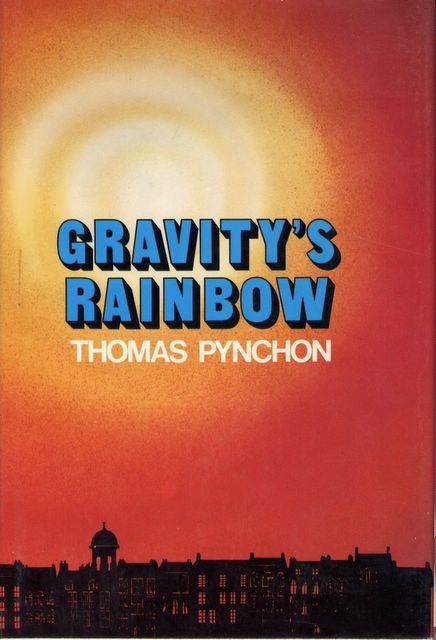
Fear not, I haven't gone postmodern on y'all, but I'm mixing it up here. A complimentary issue of BookForum magazine (Summer 2005) arrived in yesterday's mail and there is a large article on Thomas Pynchon and Gravity's Rainbow written by Gerald Howard (a Bay Ridge native, no less) and accompanied by "appreciations" by 20+ other writers, including Don Delillo, Tom Robbins, Jeffrey Eugenides, and many more. I am proud to admit that I actually read this amazing book in the early 90's, with the aid of a companion text to help me understand what the hell was going on.

It is by far the most difficult text I have ever read and the several months that I took reading it while working at Bank of America were completely gratifying. Anyway, this was on my mind this morning as I read Howard's article, which I have almost finished. Next will be the appreciative paragraphs from all the other writers. One thing that resounded was the statement that the opening line of the novel is the most memorable since Melville's "Call me Ishmael...".

GR opens with the line "A screaming comes across the sky" which alludes to the V-2 rocket launched by the Germans in WWII. These haunting six words echo over 30 years after they first appeared in print in 1973. Think: the video of the firemen working in lower Manhattan as they hear the roar of United Flight 11 as it accelerates and smashes into the North Tower of the World Trade Center. A screaming came across the sky. I knew, from Sixth Avenue, as I watched the plane I had seen just moments before detonate on the horizon, that the world would never be the same.
Posted by Picasa

Thursday, September 08, 2005

First day of school

Launching this blog with Jolee and Shayna on their first day of fourth and first grades, respectively. This is my third or fourth attempt to stick with this, so we'll see what happens. Comments are welcome, as are suggestions. Bill
Jolee and Shayna on their first day of school today. Posted by Picasa

Monday, March 14, 2005

From the Archives: Contemporary Masters Reading at the New School (Feldman, Gilbert, Kumin, Snyder)

This is part of my "From the Archives" series, which consists of texts from e-mails I sent to friends describing my experiences at poetry events. I may have taken some small editorial liberties with these texts, and I have included related pictures and hyperlinks, but these are all BBB (Before BillyBlog). Remember, for me readings are enjoyable for two separate reasons: the love of poetry, and the mania for collecting. I am who I am. Enjoy!

I apologize in advance for the length of this. I hope you find it worth reading.

I've procrastinated long enough. The following is the dispatch from The New School, West 12th Street, Manhattan, on March 10, 2005.

The event was entitled "Contemporary Masters" and featured four poets reading on back-to-back nights in Washington D.C. and in New York City. We got them the second night.
I was particularly excited about this event as the four poets in question were individuals I had never heard before: Irving Feldman, Jack Gilbert, Maxine Kumin and Gary Snyder. I have always been a fan of Snyder and he is a typical "West Coast Poet," who does not make it East very often. In fact, all of the poets were out-of-towners, so it was good to see some folks we
don't see regularly here in New York (ah, how spoiled we are here: "What? Galway Kinnell, Robert Creeley and Charles Simic AGAIN!? I'll just stay home and watch The Apprentice!" But I digress.)

It was a dark and stormy night. Well, not really. It was dark but not stormy. In fact, it was just a bit brisk. Nonetheless, the warmth of Tischman Auditorium awaited.

I arrived early, hoping for a front row seat. They didn't open the
doors right away, so I was left milling about, as some audience members mulled about. Present were your regular reading riffraff (myself included), along with the poet Gerald Stern and some odd-looking fellow in a funny hat.

Some annoying woman came in and was really loud and made a big deal of herself and gave the funny-hat dude a big hug. She then introduced her companion as a sculptor to the funny hat dude. She then introduced Funny Hat to her boyfriend. Funny Hat was revealed to be Gordon Lish. OK, so I've never read anything by Lish, but I recognized his name and guessed if I recognized it, he must be someone significant. He is, in fact, an established literary hyphenate,
novellist-critic-editor. Of course, knowing he was someone of significant literary merit, I re-evaluated his wardrobe and determined that he was not a possessor of a funny hat but, rather, a funky, tan, Tyroleanesque, felt hat, with a smattering of well-placed feathers. Of course, everyone that came up to Mr. Lish had to tell him what a marvelous hat he was wearing.

When the doors opened, I found a nice seat in the front row on the end. Only a few people grabbed front row seats before someone from the Poetry Society placed white "reserved" signs on all the untaken seats. Alas, my neighboring seat remained un-sat-upon, so I have no tidbits of
gossip or interesting conversations to recount. However, three seats over was a college student with a shaggy beard reading Balzac's Le Père Goriot inFrench and he kept closing the book on his nose and inhaling deeply, which I found pretty odd. What is interesting about Tischman auditorium is the acoustics. I was in the front row, but I could hear people talking at the door, seventy-five feet away. Sort of like that spot in that side passage of Grand Central Terminal where you talk in one corner and you can converse with someone in the opposite corner as commuters pass by.

The auditorium filled up rather nicely prior to the reading. Other attendees to note: Sharon Olds, who sat with Mr. Lish toward the back.

Please note, I took copious notes this time around so as to better report the event for posterity. Alice Quinn, New Yorker poetry editor, introduced, noting that these "master" poets are all esteemed writers who just happen to have new books out this year. She said that the poets would start with older work and finish with the newest.

The reading commenced alphabetically with Irving Feldman, native Brooklynite and now Distinguished Professor of English at SUNY/Buffalo. He was fighting a bit of a cold, but still
read directly and was quite good. He read six poems, "No Big Deal," "As Fast as You Can," which is about the Gingerbread man, "The Ecstacies," the first and last sections of a longer poem, "Teach Me Dear Sister," "Leaping Clear," a great New York poem which even mentions bicycling in Bay Ridge along the same route I usually take, and "The Recognitions."

I don't have any further info on these poems, but they were all decent. "Leaping Clear" was my favorite:

Excrescence, excrement, earth
belched in buildings--the city
is the underworld in the world.
They wall space in or drag it down,
lock it underground in holes and subways,
fetid, blackened, choking.

Next was Jack Gilbert, who was very frail and ancient (he is 79, I learned later, but Kunitz, at 95+ is sharper and more spry). With Einstein-like hair and big bushy eyebrows and a scraggily goatee, he looks like a senior poet. Gilbert currently lives in Western Mass. He had a volume
problem, and the mike was on the fritz, but I could still hear well enough. It was a bit sad, as he kept losing his place and had to pause for some time to recallibrate his reading. However, he did it adeptly, repeating lines in such a way that it was poetically and theatrically consistent. He
read 8 poems, He started with an amazing work called "Don Giovanni on His Way to Hell." Next he read "A

Brief for the Defense," which was recently praised in a review of his new book in the L.A. Times. Note the last two lines of the excerpt are amazing:

from the L.A. Times:

"In the magnificent opening poem, "A Brief for the Defense,"
he faces the intractable question of balancing joy with an
acknowledgment of suffering. In this meticulously crafted
argument, delight is a duty:

We must risk delight. We can do without pleasure,
but not delight. Not enjoyment. We must have
the stubbornness to accept our gladness in the ruthless
furnace of this world. To make injustice the only
measure of our attention is to praise the Devil.
If the locomotive of the Lord runs us down,
we should give thanks that the end had magnitude.

I frantically scribbled down those last two lines. He struggled through the next poem, "The
Forgotten Dialect of the Heart
." [Hear him read it here.] He followed with works entitled,
"Pewter," "On Growing Old in San Francisco," "More Than Sixty," "By Small and Small," "Nature of Presence," and "She Might Be Here Secretly." A moment of levity occurred when the microphone "popped" in the middle of "More Than Sixty," startling us all. Gilbert looked up, tapped the mike and commanded it: "Behave!" He then apologetically added, "I am trying." He then resumed from the beginning of the poem.

[On a side note, check out this memory here of a reading Gilbert did in 2007]
[LISTEN: More side notes: Jack Gilbert reading

"A Brief for the Defense" (mp3)
"More Than Sixty" (mp3)
"By Small and Small" (mp3)

Next up was Maxine Kumin, who also surprised me as very aged. I was expecting someone younger than the hunched 79-year old woman who was present before us. Nonetheless, her bright eyes and strong voice gave a very good reading. I reminded myself that these elder poets had not only read the night before, but had flown from a different city to do so. Maxine read 11 poems beginning with an early work "Morning Swim":

Morning Swim

Into my empty head there come
a cotton beach, a dock wherefrom

I set out, oily and nude
through mist, in chilly solitude.

There was no line, no roof or floor
to tell the water from the air.

Night fog thick as terry cloth
closed me in its fuzzy growth.

I hung my bathrobe on two pegs.
I took the lake between my legs.

Invaded and invader, I
went overhand on that flat sky.

Fish twitched beneath me, quick and tame.
In their green zone they sang my name

and in the rhythm of the swim
I hummed a two-four-time slow hymn.

I hummed "Abide With Me." The beat
rose in the fine thrash of my feet,

rose in the bubbles I put out
slantwise, trailing through my mouth.

My bones drank water; water fell
through all my doors. I was the well

that fed the lake that met my sea
in which I sang "Abide With Me."

She then read "Looking for Luck in Bangkok," "Praise Be" ["about a foal that arrived much later than expected. It was Kumin's habit to sleep in the barn when a foal was due, and she lay on a mound of sawdust that positioned her to look directly into the foaling pen. I slept on that pile for twenty-one days, she marveled ruefully"--lifted from the blog of Kingdom Books], "The Rendezvous," which is a poet taking on the Aleutian legend of a woman encountering a bear in the woods, and then a double-villanelle, "The Nuns of Childhood: Two Views" ("The first and last one I'll ever write,") she composed with Poetry magazine editor Joseph Parisi.

She then read "The Long Marriage," "Oblivion," which was bit of a catalog of suicides by poets and writers, "New Hampshire, February 7, 2003," "Fox on his Back," which was an homage to Theodore Roethke, a marvelous poem called "Widow and Dog," ("That summer it just seemed simpler to leave the window/by the bird feeder open . . . once in a thunderstorm a barred owl blundered/into that fake crystal chandelier she had always detested.") "Summer Meditation," and then the title poem of her new book Jack and Other New Poems:

Jack

How pleasant the yellow butter
melting on white kernels, the meniscus
of red wine that coats the insides of our goblets

where we sit with sturdy friends as old as we are
after shucking the garden's last Silver Queen
and setting husks and stalks aside for the horses

the last two of our lives, still noble to look upon:
our first foal, now a bossy mare of 28
which calibrates to 84 in people years

and my chestnut gelding, not exactly a youngster
at 22. Every year, the end of summer
lazy and golden, invites grief and regret:

suddenly it's 1980, winter batters us,
winds strike like cruelty out of Dickens. Somehow
we have seven horses for six stalls. One of them,

a big-nosed roan gelding, calm as a president's portrait
lives in the rectangle that leads to the stalls. We call it
the motel lobby. Wise old campaigner, he dunks his

hay in the water bucket to soften it, then visits the others
who hang their heads over their Dutch doors. Sometimes
he sprawls out flat to nap in his commodious quarters.

That spring, in the bustle of grooming
and riding and shoeing, I remember I let him go
to a neighbor I thought was a friend, and the following

fall she sold him down the river. I meant to
but never did go looking for him, to buy him back
and now my old guilt is flooding this twilit table

my guilt is ghosting the candles that pale us to skeletons
the ones we must all become in an as yet unspecified order.
Oh Jack, tethered in what rough stall alone

did you remember that one good winter?
I've included two poems of hers because she was/is quite good and her poems are memorable.


Last was Snyder, who really read remarkably. He started off, much to my delight, with two poems by Robinson Jeffers. Gotta love those California poets. [And another oxypoet, too!] He began with some remarks about how wonderful it was to be reading with the other poets, and then read Jeffers' "Eagle Valor, Chicken Mind."

Eagle Valor, Chicken Mind

Unhappy country, what wings you have! Even here,
Nothing important to protect, and ocean-far from the nearest enemy,
what a cloud
Of bombers amazes the coast mountain, what a hornet-swarm of
fighters,
And day and night the guns practicing.

Unhappy, eagle wings and beak, chicken brain.
Weep (it is frequent in human affairs), weep for the terrible
magnificence of the means,
The ridiculous incompetence of the reasons, the bloody and shabby
Pathos of the result.
Anyone familiar with Snyder and Snyder's voice can see how similar this poem from WWII is to the Snyder persona.

Snyder looked pleased with himself and said, "One more from Jeffers, and read "Ink Sack":

Ink Sack

The squid, frightened or angry, shoots darkness
Out of her ink-sack; the fighting destroyer throws out a
smoke-screen;
And fighting governments produce lies.
But the squid and warship do it to confuse the enemy, governments
Mostly to stupefy their own people.
It might be better to let the roof burn and walls crash
Than save a nation with floods of excrement.
Snyder looked slyly at the audience as a slight ripple of nervous shuffling whispered through Tischman. Simply, Snyder stated, "Nineteen Forty-four."

He then commenced with his poems, "Right in the Trail," a poem about bears, with a nod to Kumin, "Ripples on the Surface," "Danger on Peaks" and then some wonderful poems modeled on the Japanese style Haibun. He defined these as poems "with a block of prose, nailed down by haiku." I found most of these in his new book Danger on Peaks. They were "One Day in Late
Summer,"

This present moment
that lives on

to become

long ago

"No Shadow," "Shayndel," "One Thousand Cranes," "For Anthea Corinne Snyder Lowry, My Sister," "Loose on Earth," "Falling from a Height, Holding Hands," and "A Turning Verse for Billions of Beings."

Most amazing, I thought, was "Falling from a Height, Holding Hands," which was prefaced with Snyder's explanatory note that it referred to the photo from the World Trade Center on 9/11 when two people were seen jumping from one of the towers, hand-in-hand:

What was that?
storms of flying glass
& billowing flames

a clear day to the far sky -

better than burning,
hold hands.

We will be
two peregrines diving

all the way down

All in all, quite a wonderful reading. I've since read an article on Gilbert in this month's Poets & Writers and feel sort of silly not really knowing who he was, and how significant a figure he has been.

Hope you found this interesting,

Bill

[It was interesting to note that the signing afterwards was not mentioned here, until I realized that the e-mail I copied this from was sent to a poet and blogger, Gina Myers. Back then, I guess, I thought that my systematic depiction of my signature-obtaining mania might be off-putting to a poet and writer I had never met.

However, I tracked down the original e-mail sent to my friends who live vicariously through my escapades. So, after that last Snyder poem, my original e-mail continued...]

So the reading ended and I went to work. Initially it didn't look good. I approached Gilbert with books and he said that he would wait to get to the reception to sign. My heart sank. I then went over to the line by Snyder's chair, and smelly Doppelganger said he wasn't signing. I packed up and headed for the reception in the lobby. I spotted Irving Feldman sitting in the back corner. I dropped the bag and scrounged through the stacks for the Feldman pile.

He started signing, then a family friend approached. For some reason, Don Peterson is the name seared into my brain. Don is a composer/musician who lays claim to having invented the six-mallet style of playing some instrument. It's not the xylophone, but some similar instrument I guess. He introduced his blonde cellist wife. They chatted and chatted about where they lived in the city, then talked about how much the musician appreciated the friendship Irving had with the musician's dad, who was at the center of some political ousting at a university. Irving tells him to get such and such a book which has poems about the terrible terrible tragedy of this guy's father and how the administration fabricated some elaborate scheme to strip him of his tenure, etc etc etc.

[Two years later, I think I have found the right person here. I know I researched this back in '05 to no avail, but I believe now, the gentleman was actually Rob Paterson, whose blog and website
bear striking similarities: aside from the Don/Rob Peterson/Paterson issue, his biography states that he "pioneered the development of a six-mallet marimba technique," and that he is married to a violinist who is certainly blonde. I don't know how I mixed up the violin and the cello, and I don't recall what they looked like, but it seems like a match. And, this is one of the sexiest pictures I've ever seen with a violin. Paterson was raised in Buffalo, where Feldman teaches, and his father was a sculptor and painter. I'm unable to get any further, but I'm 94% certain this was the same guy.]

Meanwhile, during this whole conversation, I am standing there, signus interruptus, with a few books still in need of inking. Peterson, or whatever his name was, looks at me and says, "I'm sorry to interrupt you," and I say "Not a problem, don't worry." And Irving says, in an irritated way, "Don't apologize to him!" Meaning me. I guess talking about the injustice of it all put him in a bad mood. I felt that he was annoyed that I just didn't leave. Oh well. He sat back down and signed the other books. I mean, I only had 4, for goodness sake.

So, the PSA had a table set up in the reception area and there was a mob around everyone. Maxine Kumin had the smallest mob, so I went to her first. I approached and she eyed me warily along with my stack of (only) five books. I asked her to inscribe the first one and she said, "Look," with a tone of annoyance in her voice, "I have a problem with my writing hand and I can't be doing a lot of scribbling here."

I had never had such problems with two poets right in a row like this before. Had I lost my boyish charm and innocent touch? Should I shave the beard? I said, "That's okay, I understand," and she continued to sign. I then interjected, "I understand that you don't want to sign them all, which is fine. I ask that way specifically so writers don't think I'm some sort of book dealer." Always divert a writer's wrath onto the undesirables: those who are looking to profit from a signature. She immediately chimed in, "Did you see that one earlier? He must have had a dozen books!" Wide-eyed, I replied, "Really? No!" She finished and said, "SO, what are you going to do with your collection?" She seemed skeptical still, so I simply replied, "I guess my two daughters will inherit them when I'm gone." She looked at me and kindly said, "Hopefully that won't be for a long time." Whew. Maxine was tougher than I thought. Feisty New Englander indeed.

Next, I approached Gary Snyder, as the line for Jack Gilbert was still so long, much to my surprise, as I consider Snyder an icon. Snyder was sitting beside a rolling storage box that was improvised as an extension of the table. No respect for those Californians here in New York! Snyder saw me and my stack of books and smacked the cart and said "Lay 'em right here!" He signed six and we chatted about Jeffers. He beamed, "He is wonderful, isn't he!?" I mentioned Occidental and got the standard "beautiful campus" remark. I then thanked him for signing the books that I mhad mailed him many years back. We parted amicably.

Then, I got in line for Jack Gilbert and he signed 4 books. I thanked him and said how much I loved the line at the end of "A Brief for the Defense". He smiled and said, "I'm so glad you liked that line. It's one of my favorites and no one ever mentions it."

Snyder was still mulling about so I invested in a little extra and bought a copy of his new book from the PSA table and grabbed two more anthologies from my bag. I approached him again and asked if he'd sign the copy I just bought plus two more. He couldn't find his pen anywhere. I lent him mine, while nervously looking around for Nobelist Derek Walcott, who infamously tried to steal my pen several years ago at the 92nd Street Y.

Snyder inscribed the new book: "For Bill Cohen, 'Honor the Dust,' " and then signed the other two anthologies. One was my Milosz-edited Book of Luminous Things. I showed him the "William Cohen, Occidental College '89" bookplate and explained how I had sent this off to Berkeley and it had taken a year but Milosz had finally sent it back. He then said that I'd be surprised by the boxes of things that people send him, that it takes forever to go through them all. He handed me back my pen and said "Nice pen," --it's a silver Caran D'Ache ballpoint. And we parted ways.

Thus endeth the signing. In all, I got the Snyder book and 18 anthologies signed by the four poets (26 signatures in all). I'd list all the books I got signed, but it would bore you. My friend Brian had 3 books in the mix, each of which garnered at least one signature.

On the way home, I opened the Snyder book and admired the inscription. Then I turned the page to discover, alas, it was a third printing, not a true first edition. Oh well, every signing can't be perfect.

Monday, October 04, 2004

From the Archives: Geraldine Dodge Poetry Festival, 2004

This is part of my "From the Archives" series, which consists of texts from e-mails I sent to friends describing my experiences at poetry events. I may have taken some small editorial liberties with these texts, and I have included related pictures and hyperlinks, but these are all BBB (Before BillyBlog). Remember, for me readings are enjoyable for two separate reasons: the love of poetry, and the mania for collecting. I am who I am. Enjoy!

Subject: Dodge Poetry Festival Report
Date: 10/4/2004 13:0:41 GMT

Here is my dispatch from Dodge. It's long, so you may need to read in several sittings. Hope you enjoy.

Bill


On Saturday, October 3, I arrived early at Duke Farms in Hillsborough, New Jersey. It was a gloomy, overcast day. Rain threatened. I was nervous. So were my books. Mud was a problem, but I had checked the Dodge website so I knew to wear boots. It was lucky I arrived early, because the fields for parking closed because of the mud and the number of cars. When I left at the end of the day, I was handed a flier advising that all parking would be off site on Sunday. Attendees would have to shuttle in from 2.5 miles away. Fortunately, I was on site and only there Saturday. I made four trips back to the car during the day and early evening to rotate out books from my oversized Green Bay Packers duffle bag.

I first went to the main tent, holding two thousand seats. Coleman Barks was reading with the accompaniment of the Paul Winter Consort. Barks read Rumi [he is one of the foremost translators of the mystic poet] and some of his own work. He has a melodic Southern voice and is very good-natured. He's always a crowd-pleaser and he did not disappoint.

Barks ended at 9:15, and I went to the "South Island Tent" for a session called "Conversations on Craft" with Sandra Cisneros. I've never seen Cisneros, so this session was prioritized for me, especially since I have a rare paperback original first edition of My Wicked Wicked Ways. Anyway, Cisneros was fascinating, although she conversed less on craft and read more of her work, poems and prose.

She also read the work of Borges and Galeano (The Book of Embraces). Most striking was her talking about her time at the Iowa Writers' Workshop as being very difficult and troubling for her. Most interesting was her describing the writing process as follows, pardon the paraphrasing:


"It's like I'm dog-paddling in the ocean. I keep paddling until I come across a piece of driftwood. I cling to it. I keep paddling, but I at least have something to hold onto. I keep picking up pieces of driftwood. Eventually, I have enough where only part of me is in the ocean. I keep going, adding as I find things. Eventually, I only have to paddle. Then I have a boat. And finally I have a vessel that can take me places. When I strike land, I am finished."

I though it was a nice metaphor.


When the session was over, I approached for signing. She blank-signed my first of My Wicked Wicked Ways, my hardcover first of Wicked Ways, my first of Loose Woman, her page in my United States of Poetry anthology, and her page, Texas, in my NEA publication Writing America. [Click the Writing America link gives you a 112-page pdf file available for download - it's an amazing and scarce publication].

I then plodded downhill to the "Gingko Lane Tent." Concurrent with the Cisneros event was "Conversation: Going Public with Private Feelings." All the panelists were still lingering about, chatting and signing books. I first had Stephen Dunn sign 5 copies of my Best American Poetry (BAP). He signed '89, '91, '92, '93 and '03. He did not seem to be in very good shape. He had terrible hand tremors and apologized for not signing things nicely. I expressed my gratitude for his taking the time to sign everything for me.

Galway Kinnell
was around, but I didn't have anything for him to sign, yet. I have seen Kinnell at least a half a dozen times, so he has signed all my BAPs. I did catch Jane Hirshfield and reminded her of meeting me at Dodge '00. I thanked her again for signing my Poetry in Motion poster of "The Groundfall Pear" which is hanging in my office. I also got her to sign BAP '99, '01 and '04. Then, I hovered while Edward Hirsch chatted with some people for an interminable amount of time. Then, I had him sign BAP '03 and told him how much I enjoyed his weekly poetry column with The Washington Post.

Next, I went back to the car to dump the Cisneros books and reorganize my big bag o' poems.

I headed back and faced the conundrum of the "Poets Among Us" problem. These poets are the lesser ones, who do readings for an hour in groups of three. I had caught some of them while waiting for Ed Hirsch, but there were 18 poets reading simultaneously so I had to choose based on "most bang for the buck" vis-a-vis my BAP series. I caught the tail end of the trio of Catherine Doty, Wesley McNair and James Richardson. McNair signed my BAP '89 and '99 at the "Smartweeds Tent". I then ran over to the "Gingko Lane Tent" and had David Ray sign my BAP '99. There I had the embarrassing moment of the day when Ray, signing a poem about Hemingway, asked if I liked the Hemingway poem he had read just moments earlier. Of course, I was over at Smartweeds and had to fess up that I had missed the reading. Oh well. Then, the guy from Ginkgo that I did hear, Jim Daniels, signed my BAP '00.


I stopped by the Borders tent and picked up a paperback [Here There Was Once a Country] by the Lebanese poet Venus Khoury-Ghata, who was reading next at the Main Stage. She was reading with Marilyn Hacker, and they alternated reading Venus' poems, Hacker in English, Venus in French. Of note, was a long sequence about a cherry tree disappearing from her family yard the night of a big storm, and the fiction invented by the children that the tree had gone to America to make it big. The Main Tent featured signings after each reading, but they goofed and forgot to tell Khoury-Ghata to come to the signing. Right after she read, Paul Muldoon read.

Despite the difficult of his poems, I always enjoy his readings because of his self-deprecating Irish humor.


Post-reading, he came over, as did Khoury-Ghata and Hacker. I was at the head of the Muldoon line and he signed my BAP '03 and '04. I then hopped over to the Hacker/Khoury-Gata table and Ms. Hacker signed the book of Venus she had translated, her poem in BAP '92 and added another signature to my Toronto friend Brian's AIDS anthology, Poets for Life. Sorry, Brian, that's the only book of yours I had in tow. Then, Ms. Khoury-Ghata signed the book Hacker had
inscribed, but despite the simplicity of my name, she could not understand, so it is inscribed to Beuld, or something like that. Oh well.

Jane Hirshfield read on the main stage next. There was a bit of awkwardness when Jim Haba, the Dodge Poetry Festival organizer began his introduction of her, "Jane Kenyon is from Mill Valley...." He went on for at least a minute before someone signaled him and corrected him. Jane Kenyon died several years back and her husband, Donald Hall, was at the festival but I'm not sure if he was in the tent at the time. Anyway, she read some very moving poetry, including some work about Rwanda and Sudan that was very sobering. She ended with a very moving elegy to Czeslaw Milosz, the Nobel Laureate who had just passed back in August. It was the first time she had ever read it and professed to be very nervous about it. At the signing after the reading, she inscribed my proof of her last book Given Sugar, Given Salt, as well as her entry in the anthology First Loves, which is a book where poets introduce poems that first inspired them. I told her how much I had enjoyed the Milosz tribute and that it was his anthology A Book of Luminous Things where I had first read one of her poems.

Next, was Adonis (pronounced Ah-doh-neese), a Syrian poet who read in tandem with a translator, the Libyan-born Khaled Mattawa (a "Poet Among Us"). It was fascinating hearing the four poets in succession, the Lebanese French of Khoury-Ghata, the Irish Brogue of Muldoon, the plain American peacefulness of Hirshfield, and then the Arabic of Adonis. At the signing after the event, I just had Mattawa sign his entry in BAP '96. Nothing for Adonis.

Break time. I grabbed a bite at the food tent and ate it on the way back to the car. Shuffling of books and planning for the rest of the day. Sound exhausting? It was only 3:00 PM. I had 7 hours to go! Ah, I love Dodge! I was invigorated as I walked back the half-mile from the parking field and two deer galloped by fifty yards away.

There were several concurrent sessions next and I went to the one called "Finding Poetry's Inner Music, Saying the Unsaybale." The panelists were Coleman Barks, Marilyn Chin, Yusef Komunyakaa and C.K. Williams. This was a lively group and consisted mostly of Q&A. Some of the questions people were asking were pretty bizarre. Is there anything that is unsayable in the 21st century. Several people stated that everything was said in the 90's and nothing shocked
anymore, then we talked about The Patriot Act, and Barks praised Williams, who thanked Barks and then Chin scolded them for their male bonding. I was interested in meeting Chin, who was one of the performers at Dodge '94 and was featured in the Bill Moyers' special The Language of Life, which was such a transcendent series for me. She was very friendly and signed her entry in The Language of Life book, her entry in BAP '96, and an old copy of a poem in an old issue of The
Iowa Review
. The production of this Iowa Review caused Chin to regale me loudly as a "top-class collector!"

Williams signed his book The Singing (all of these are first editions, by the way, unless otherwise noted) and BAP '03. Komunyakaa signed his new book Taboo and BAP '03 and BAP '04 and the aforementioned First Loves anthology.

I ran to the "Mermaid Fountain Tent" to see if I could catch Donald Hall. He was there with Jane Hirshfield. Weird, considering the gaffe by Haba earlier. I thought it best not to bring it up. Billy Collins was ill, as I learned from signs posted that he would only be appearing on Sunday. Bummer. I was last in line for Hall, who signed BAP '99, '00,'01, and '02. He also signed a Poetry in Motion poster , the poem "Sew":


Sew

She kneels on the floor, snip snip

in the church of scraps,

tissue like moth's wings,

pins in the cushion of her mouth,

basting and hemming

until it stands up like a person

made out of whole cloth.


Still, I like folded

on the bolt in the dark warehouse,

dreaming my shapes.

+++++++++++++++++++++++++++++++++

I then stopped by Jane Hirshfield, who said "Hi Bill!" I showed her the Book of Luminous Things she had signed for me 4 years earlier and showed her where Milosz had inscribed it for me.

I then ran to the Gingko Lane tent, where they had been discussing "Poetry and Class" but Lucille Clifton, Philip Levine and Joyce Carol Oates had already left. But, I was consoled by Franz Wright, this year's Pulitzer winner who signed my Milosz anthology. I then walked over to "The Little Blue Stem" tent to get in line to do an open reading. I was standing there thinking how unusual it was that Wright was not in any BAP anthologies. I double-checked my spreadsheet to discover, alas, he was in BAP '92. I looked back at the Gingko Tent, but the musicians from the Ecuadorian band Yarina were playing and Wright had disappeared. My one big goof of the day.

I stood in line for about 45 minutes and then read to about 40 people, "Your Love is A Machete," for Shayna, which many of you have seen in the past week [click here to read it]. I got cheers. The next guy came up and started "I believe in the economy of words, so this will be short." It sounded like a shot at my poem, which didn't seem very long, but did have a lot of superfluous information in it. Later in the evening I wrote a response poem called "I Believe in the Economy of Words". If you want to see either of these poems, let me know and I will send them.

A little bit later, I went for my final trip to the car for reshuffling. This time, when I returned, the bag was noticeably lighter. Hurrah.

Home stretch. Reading from Cecilia Vicuña, Peruvian, shamanistic, incredible, artistic. Imagine if Yoko Ono could sing less in an avant-garde style, and she sang poetry, that was what Vicuña was like. Of course, I didn't have anything for her to sign, and still enjoyed her. So it's not all about the signing. Incredible irony: today at a garage sale I picked up an art/poetry anthology called ClothesLines. It includes a poem by, you guessed it, Vicuña.

Next, Ed Hirsch, who was good, and who later signed his poem in an old May Swenson anthology called American Sports Poems. He seemed surprised to see it. Then, Joyce Carol Oates, who was surprisingly good and good-natured. She read a poem called "$" and talked about Donald Trump, taking a shot at him, saying he didn't read, although he might have someone read to him. After her reading, she signed one of her novels that she had written as Rosamond Smith (Starr Bright Will Be with You Soon), a book put out by the New York Public Library called A Commonplace Book, and my First Loves anthology.

Then, the best of the evening, Philip Levine, who was very powerful and when he mentioned that he lived in brooklyn now, some dopes on the other side of the tent started screaming, he retorted, "That's it, I'm moving to Queens." The best part was when he was joined by Dave Douglas on trumpet and Uri Caine on piano. He read his wonderful poem "They Feed They Lion" to jazz accompaniment and then finished with two poems by Federico Garcia Lorca, most notably "New York (Office and Denunciation)".

When Levine signed, I introduced myself and said I had come to his office a few years back, "Yeah," he said, "you had a stack of books." Of course, in front of me I had a few, which he signed, the Richard Howard anthology Preferences, BAP '03, Jorie Graham's ECCO anthology, The Paris Review Anthology, First Loves, The Simple Truth (shocker! One of his books!) and an old Iowa Review in which he is interviewed by the novelist Howard Norman. He wasn't unhappy to see me go.

Finally, Galway Kinnell and Sharon Olds did their joint reading thing that they always do at Dodge. It's a melange of their own poems and poems of others, alternating on a theme. This year it was "Marriage, A Conversation in Poems." They always bring the house down and this was no exception. Galway signed for me: Graham's ECCO anthology, an old Salmagundi magazine (thanks Brian), that NYPL book Oates also signed and The Paris Review anthology.

I had one thing for Olds, but the line was too long, it was almost 10, and it was only a poem in an issue of Ploughshares. Next time I catch her in NYC.

So, an amazing day. As I mentioned in my first e-mail, not only was the poetry great, but I fed my other obsession, collecting signatures in my ever-expanding repertoire of anthologies and literary magazines. 19 poets, 57 signatures in 31 different items. And if you think that's excessive, I missed Billy Collins and the chance to sign another Poetry in Motion poster. Also, I had two books for Lucille Clifton, who I missed completely, plus I had a book for Hall forgot to get signed, another anthology and 6 magazines that never made it out of the car.

But I'm not complaining.

Thanks for indulging me. Next Dodge is in 2006. Anyone want to join me?

Friday, December 05, 2003

From the Archives, P.S.A. Chapbook Reading, December 5, 2003

This is part of my "From the Archives" series, which consists of texts from e-mails I sent to friends describing my experiences at poetry events. I may have taken some small editorial liberties with these texts, and I have included related pictures and hyperlinks, but these are all BBB (Before BillyBlog). Remember, for me readings are enjoyable for two separate reasons: the love of poetry, and the mania for collecting. I am who I am. Enjoy!

The following is the text of an e-mail to two friends about the Poetry Society of America's inaugural reading for its first Chapbook Contest winners, in which the winners read with the judges who selected their work.

Subject: PSA reading
Date: Fri, 05 Dec 2003

Good day gents:

Last night I attended:

Poetry Society of America Chapbook Reading
The Poetry Society of America presents a poetry reading of this year's prize-winning chapbooks with the winners, Paul Killebrew, Dawn Lundy Martin, Tess Taylor, Kerri Webster (bios of the four winners here), and the judges, John Ashbery, Eavan Boland, Carl Philips, and C.D. Wright.

It was a groovy reading.

First Ashbery read from Chinese Whispers, the introduced Killebrew who was good, read from his chap [entitled Forget Rita], then a poem called "John Fuckin' Ashbery" that went over well. Then Eavan Boland read. She stunk. Irish Potato Famine. Big deal. Way too serious.

[Note from the future: I'm guessing I was a bit too harsh on Ms. Boland at the time. However, these were my thoughts shortly after the event. I didn't want to self-censor myself here, although my lack of any constructive criticism is telling, for sure.]

Then Tess Taylor. She was mediocre and rather overdramatic.

[Again, perhaps my demeanor was tainted by these poets' successes vis-a-vis my relative lack of accomplishment.]

Then Carl Phillips, best of the established poets.

[Another interjection, the poetry establishment, I'm sure, would object to Phillips being regarded as better than John Ashbery, who is poetic royalty. Even I, in retrospect, raise my eyebrows at this statement.]

He was funny, ending with a hilarious homoerotic poem about cowboys. His poet Kerri Webster was very good with a series of poems loosely based on Joseph Cornell's work. Finally C.D. Wright, who was forgettable and her choice Dawn Lundy Martin, a short-haired African-American young woman whose sexual imagery was too violent and stark for my liking.

[Another interjection from the future. I'm a bit disappointed in my recollection of the reading. As you will see when I post the 2004 and 2005 recaps later on --sadly, I missed the 2006 event--I was still a bit short-sighted when it came to appreciating a good evaluation of these readings. My apologies to any of the poets who may be off-put by my retroactive dismissal of their work. This year, it seemed, I was more about the signing afterwards, than the reading itself.]

The reception was chaos. I pounced on Ashbery who signed Wakefulness, Girls on the Run and And the Stars Were Shining. Then I got Boland to sign her contributions in the Pinsky-edited America's Favorite Poems and my anthology First Loves: Poets Introduce the Essential Poems That Captivated and Inspired Them. Then I nabbed Carl Phillips, who was very flirty with me as we talked about the National Book Award reading I saw him at a few years back. He signed his contribution [the poem "A Mathematics of Breathing"] in The Best of the Best American Poetry, and his pages [the poem "Alba: Innocence"] in the volume of Ploughshares guest edited by Yusef Komunyakaa and [the poem "Of That City, the Heart"] in The Paris Review (#148, Fall 1998). I thanked him for signing them and told my J.D.McClatchy story about his empathizing with my mania for obssessive collecting. Phillips recalled a story McClatchy tells about how, as a young poet, J.D. asked W.H. Auden to sign a book and Auden had J.D. turn his back and used his back as a table to lean the book against.

I then went out to the foyer for a glass of wine. There I got C.D. Wright to sign her entries in Pinsky's The Handbook of Heartbreak: 101 Poems of Lost Love and Sorrow, my NEA Writing America booklet (now signed by poets from 12 of the 50 states, one of my favorite items) and above Ferlinghetti in my United States of Poetry book. Wright was kind of cold and dismissive.

Then I spotted David Lehman and had him sign my Best American Poetry 2002. I had my printout (23 pages) listing all the items I had with me and every poet appearing in them. It came in handy, but alas, Vijay Seshadri and Marie Ponsot had already signed what I had with them as contributors. I did also get Alice Quinn, The New Yorker poetry editor to sign her forward in First Loves. We chatted about the project. How the editor [Carmela Ciuraru] had asked several poets to write the intro, but they all wanted to contribute instead (it's a book with poets introducing poems that inspired them as young writers), so Alice ended up writing the forward. She recommended, if I liked this book, which I do, to check out something Richard Howard did with the poems of Elizabeth Bishop. But I can't seem to find it on the net (the title eludes me and I can't track it down). More later. [I later grabbed a copy online, it is called Preferences: 51 American Poets Choose Poems From Their Own Work and From the Past (1974).]

Anyway, I caught John Ashbery again and had him sign my friend Brian's Strand anthology [The Contemporary American Poets] (merry holidays!) and then went back to good old Carl and had him sign 3 more Best American Poetry volumes, flirting shamelessly. Yes, boys, I've resorted to whoring myself for signatures.

In addition, I purchased the 4 chapbooks ($20 for the set, nice little "first book" items) by the new poets, all of which I got inscribed.

Totals for the night: 10 poets, 21 signatures.

Plus, I hit 12th Street Books before the reading and found a nice hardcover copy of e.e. cummings' 95 Poems ($7.95) and a 1st edition of Sandra Cisneros' Loose Woman ($5.00).

Not a bad night,

Bill

p.s. Doppelganger was there. Baseball hat. No leg cast.

Tuesday, April 29, 2003

From the Archives: Louise Gluck and Mark Strand at the Russian Samovar (April 29, 2003)

This is part of my "From the Archives" series, which consists of texts from e-mails I sent to friends describing my experiences at poetry events. I may have taken some small editorial liberties with these texts, and I have included related pictures and hyperlinks, but these are all BBB (Before BillyBlog). Remember, for me readings are enjoyable for two separate reasons: the love of poetry, and the mania for collecting. I am who I am. Enjoy!

This was originally titled "How I Pissed off the Poet Laureate"

April 29, 2003, 6:50pm Russian Samovar W. 52nd St---waiting for a reading to begin---Louise Glück & Mark Strand---nice pair o' poets ~!~ Should have something to say. Should say. Dinner, bag of Arare [Japanese rice crackers] & red bean dessert treat ....

Let's see how this goes-- I left behind tons of stuff. We shall see. We shall see.

8:50pm PacificW36 [Meaning, on the W train between Pacific Street and 36th Street] Train luck galore-- the reading was okay. Glück was good at first, but I am certain she will never read there again. She read two poems, both with multiple parts. They were good, but she lost confidence as the reading progressed. The Samovar is not a silent hall. It is upstairs at a restaurant --- a Russian restaurant with noisy patrons. So, as L.G. read, there was an occasional buzzer sound...My guess is that it was the kitchen buzzing up a dumbwaiter or something. I was in front. I could hear it. I'm guessing Louise could too. Plus there is the hum of downstairs conversation, maybe a phone ringing, & distinct, the shooka-shooka-shooka of a martini being rigorously & expertly shaken. I watched her sit down, a grim look on her face. The man next to her bent his ear, she whispered to him. He patted her arm reassuringly.

Then Strand, who gave me a candy before the reading. A friend of his arrived, seated near me, explained that someone had given her the candy & she had no desire to keep it around--Mark peeled the foil and eyed the chocolate ball suspiciously, then bit, then consumed. Later, they offered me one & the plastic container got passed around. It was tasty. I was going to put the wrapper here -> but it was too big, so next page it is.

It is Austrian! Was delicious!

Anyway, Strand was good, read some new work, one called "2002" about Strand not waiting for death. Death waiting for him.

I am not thinking of Death, but Death is thinking of me.
He leans back in his chair, rubs his hands, strokes
His beard and says, “I’m thinking of Strand, I’m thinking
That one of these days I’ll be out back, swinging my scythe
Or holding up my hourglass to the moon, and Strand will appear
. . . . . . . . . . . . .
O let it be soon. Let it be soon.

[This poem subsequently appeared in his book Man and Camel.]

He read something from Blizzard of One & then a 7-part piece he did for a classical chamber music piece --Haydn? [It was, in fact, Haydn’s Seven Last Words of Christ. You can read about this piece further in a review of Strand's book Man and Camel, in which this work appears. The review is here, in the blog One Poet's Notes]

Hmmm. L.G. looked scrunched & unhappy the whole time. I approached her post-Strand for signings. She signed/inscribed 2 of her books to me (Vita Nova & Meadowlands, then Writing America [NEA-published pb from a few years back... I've never seen another and mine is signed by Robert Pinsky, Linda Pastan, Rita Dove, Joy Harjo, Alberto Ríos, Mark Strand, J.D. McClatchy, Phillip Levine, Charles Wright, Louise Glück and John Haines, each writer representing a state.], my spare copy of CAP [The Contemporary American Poets] & her ed. of BAP [The Best American Poetry] (93). 5 signs in all. I had more, but....


But she was in a bad mood, remember? I was saying, please sign, blah blah then:

BC [duh, me] - I've been in New York for 7 years, this is the first chance I've got to hear you read.

LG - Well, I'm sorry this was your introduction to me.

BC - What do you mean?

LG - It was dreadful! The sound was bad, there was too much noise, I couldn't hear myself think!

BC - It wasn't so bad.

LG looks at me like that was an underhanded remark. I recognize this, stammer:

BC - I've been to several readings here and there have been much wor---(I catch myself)

She is regarding me with a you-better-quit-while-you're-ahead look, a there's-nothing-you-can- say-that-will-make-me-feel-better look.

BC -Thank you for signing my books.

LG - (A look that acknowledges my thanks, while letting me know she is done with me)

Strand, however, was jovial & inscribed a pb copy of his Selected Poems (top on a stack of 5) "Could you inscribe it?" I asked.

Strand replied, "Inscribe it, eh? It's worth less that way."

I coyly respond, "Oh, I don't know about that!"

Then, he blank-signed the CAP anthology on the title page, BAP 2000, First Loves, and BAP 93.

Hey, I'm out of practice, 2 poets, 11 signs. not too shabby.

And I score points for getting home, pulling in 95th St at 9:20pm!

++++FIN++++

I recreated the journal entry as it was written, without the candy wrapper, of course, which is taped to the page of the journal.

Think Louise will remember me? It is doubtful she'll ever do the Samovar again.